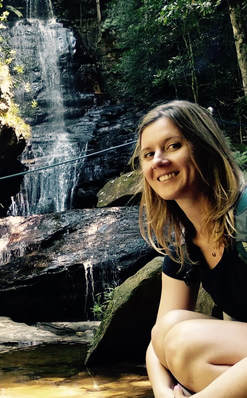
Dr. Rachael Dudaniec
My lab investigates how micro-evolutionary changes at the molecular level result in macro-ecological patterns, and how landscape and climatic features affect this. This involves looking at how developed landscapes and deforestation influence gene flow, how a changing climate affects adaptability of species that are expanding their ranges, or how parasites shape the behaviour and evolution of species. My lab aims to produce results that can inform conservation outcomes, by providing tools supported by field data at ecological and molecular levels. We use a combination of genomic sequencing data, landscape data and eco-evolutionary models to answer pressing questions about how humans are shaping biodiversity and species' responses to changing environments.
Teaching
I convene BIOL2110 'Genetics' (2nd year), and ENVS8407 'Field Methods in Environmental Science' and teach in to the following units: BIOL8750 ('Contemporary Conservation in Australia'), BIOL3420 ('Biodiversity and Conservation'), BIOL8610.).
Brief background:
Current position
Senior Lecturer in Biological Sciences (since 2018):
School of Natural Sciences
Macquarie University, Sydney, Australia
2015-2017
Lecturer in Biological Sciences
Department of Biological Sciences
Macquarie University, Sydney, Australia
Postdoctoral Research positions
2013-2015 Marie Curie Postdoctoral Researcher (funding: MC-IIF)
Department of Biology, Lund University, Lund, Sweden
2011 –2012 Postdoctoral Researcher (funding: ARC Linkage)
School of GPEM, University of Queensland, Brisbane, Australia
2008-2011 Postdoctoral Researcher (funding: BC Government Forest Science Program)
Department of Forest Sciences, University of British Columbia, Vancouver, Canada
Education
2005-2008 PhD in Ecology and Evolution
School of Biological Sciences, Flinders University, Adelaide, Australia
2004 Honours in Biology (First Class)
School of Biological Sciences, Flinders University, Adelaide, Australia
2001-2003 Bachelor of Science in Biodiversity and Conservation
Flinders University, Adelaide, Australia
CURRENT LAB MEMBERS
My lab investigates how micro-evolutionary changes at the molecular level result in macro-ecological patterns, and how landscape and climatic features affect this. This involves looking at how developed landscapes and deforestation influence gene flow, how a changing climate affects adaptability of species that are expanding their ranges, or how parasites shape the behaviour and evolution of species. My lab aims to produce results that can inform conservation outcomes, by providing tools supported by field data at ecological and molecular levels. We use a combination of genomic sequencing data, landscape data and eco-evolutionary models to answer pressing questions about how humans are shaping biodiversity and species' responses to changing environments.
Teaching
I convene BIOL2110 'Genetics' (2nd year), and ENVS8407 'Field Methods in Environmental Science' and teach in to the following units: BIOL8750 ('Contemporary Conservation in Australia'), BIOL3420 ('Biodiversity and Conservation'), BIOL8610.).
Brief background:
Current position
Senior Lecturer in Biological Sciences (since 2018):
School of Natural Sciences
Macquarie University, Sydney, Australia
2015-2017
Lecturer in Biological Sciences
Department of Biological Sciences
Macquarie University, Sydney, Australia
Postdoctoral Research positions
2013-2015 Marie Curie Postdoctoral Researcher (funding: MC-IIF)
Department of Biology, Lund University, Lund, Sweden
2011 –2012 Postdoctoral Researcher (funding: ARC Linkage)
School of GPEM, University of Queensland, Brisbane, Australia
2008-2011 Postdoctoral Researcher (funding: BC Government Forest Science Program)
Department of Forest Sciences, University of British Columbia, Vancouver, Canada
Education
2005-2008 PhD in Ecology and Evolution
School of Biological Sciences, Flinders University, Adelaide, Australia
2004 Honours in Biology (First Class)
School of Biological Sciences, Flinders University, Adelaide, Australia
2001-2003 Bachelor of Science in Biodiversity and Conservation
Flinders University, Adelaide, Australia
CURRENT LAB MEMBERS
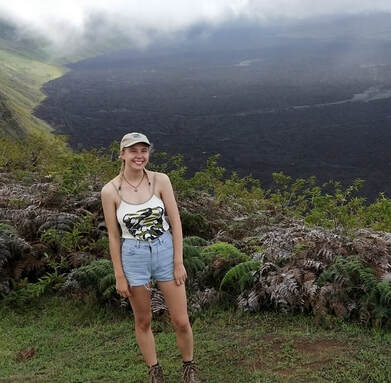
Abbie Hay (PhD candidate: 2023- present)
Abbie is a PhD student with Rachael Dudaniec as primary supervisor, Sally Potter as associate supervisor, and Sonia Kleindorfer (Konrad Lorenz Institute, Austria) as adjunct supervisor. Abbie’s PhD research is funded by The Austrian Science Foundation (awarded to Dudaniec and Kleindorfer). It aims to use Whole Genome Sequencing and phenotypic data to investigate evolutionary processes occurring through invasion of the introduced parasitic fly Philornis downsi across the replicated island system of the Galápagos Islands. The results of Abbie’s research will help to inform important questions in the management of a high-risk parasite which remains an urgent extinction threat to Darwin’s Finches. Prior to this, Abbie completed her Honours research with the Molecular Ecology Lab at Flinders University (MELFU) which assessed the relative contributions of spatial and environmental factors driving evolutionary divergence of the Amazonian characin fish Triportheus albus,. Abbie also worked as a lab and field assistant in the Coastal Ecosystem Ecology Lab at Flinders University (CEELFU). Contact: [email protected].
Abbie is a PhD student with Rachael Dudaniec as primary supervisor, Sally Potter as associate supervisor, and Sonia Kleindorfer (Konrad Lorenz Institute, Austria) as adjunct supervisor. Abbie’s PhD research is funded by The Austrian Science Foundation (awarded to Dudaniec and Kleindorfer). It aims to use Whole Genome Sequencing and phenotypic data to investigate evolutionary processes occurring through invasion of the introduced parasitic fly Philornis downsi across the replicated island system of the Galápagos Islands. The results of Abbie’s research will help to inform important questions in the management of a high-risk parasite which remains an urgent extinction threat to Darwin’s Finches. Prior to this, Abbie completed her Honours research with the Molecular Ecology Lab at Flinders University (MELFU) which assessed the relative contributions of spatial and environmental factors driving evolutionary divergence of the Amazonian characin fish Triportheus albus,. Abbie also worked as a lab and field assistant in the Coastal Ecosystem Ecology Lab at Flinders University (CEELFU). Contact: [email protected].

Sabrina Haque (PhD candidate: 2022-present)
Sabrina is a PhD student with Dr Rachael Dudaniec as her primary supervisor and Dr Fleur Ponton as her associate supervisor. Prior to this, Sabrina completed her MSc (Research) in Professor Rick Cavicchioli’s group at UNSW-Sydney, where she analysed metagenomes of previously under-studied lakes in the Vestfold Hills of East Antarctica. Sabrina’s current PhD research focuses on pollinator-pathogen associations with nutrition and environment, with a focal area covering the extent of Tasmania, Australia. Her project is funded by an ARC Future Fellowship (to R Dudaniec, from 03/24 onwards) and by a Macquarie University Research Acceleration grant to R Dudaniec. By undertaking a suite of genomic approaches to assess bee health in Australia (e.g. microbiome, virome, pollenbiome), Sabrina aims to answer critical questions regarding bee health (i.e. in bumblebees, Bombus terrestris versus honeybees, Apis mellifera) and evolution, essential for managing biosecurity risks to pollination services. Thus, Sabrina’s PhD project will contribute towards Australia’s capacity for disease surveillance, including live bee imports and invasive bees. [email protected]
Sabrina is a PhD student with Dr Rachael Dudaniec as her primary supervisor and Dr Fleur Ponton as her associate supervisor. Prior to this, Sabrina completed her MSc (Research) in Professor Rick Cavicchioli’s group at UNSW-Sydney, where she analysed metagenomes of previously under-studied lakes in the Vestfold Hills of East Antarctica. Sabrina’s current PhD research focuses on pollinator-pathogen associations with nutrition and environment, with a focal area covering the extent of Tasmania, Australia. Her project is funded by an ARC Future Fellowship (to R Dudaniec, from 03/24 onwards) and by a Macquarie University Research Acceleration grant to R Dudaniec. By undertaking a suite of genomic approaches to assess bee health in Australia (e.g. microbiome, virome, pollenbiome), Sabrina aims to answer critical questions regarding bee health (i.e. in bumblebees, Bombus terrestris versus honeybees, Apis mellifera) and evolution, essential for managing biosecurity risks to pollination services. Thus, Sabrina’s PhD project will contribute towards Australia’s capacity for disease surveillance, including live bee imports and invasive bees. [email protected]
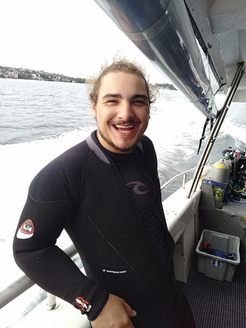
Dylan Geraghty (Masters of Research 2023)
Dylan is a Masters student with Jaco Le Roux as his primary supervisor and Rachael Dudaniec as associate supervisor and Scott Carroll (University of Davis, CA) as adjunct supervisor. His project is funded by an ARC Discovery Project (awarded to Le Roux, Dudaniec and Carroll) and aims to assess, via experimental evolution and genomics, whether the native soapberry bug (Leptocoris tagalicus) can be artificially selected to feed more efficiently on its invasive weed host, the balloon vine (Cardiospermum grandiflorum and C. halicacubum). His project takes place along the east coast of Australia (from Sydney to QLD) and in the Northern Territory. The project has implications for the use and development of native biocontrol agents to manage invasive and problematic weeds in Australia. A suite of breeding experiments, RAD-seq, morphological and nutritional variables are being applied to the system to test for genetic divergence between host plants, native versus invasive host plant fitness and selection for bug beak length - the limiting factor that enables efficient feeding on balloon vine seeds.
Dylan is a Masters student with Jaco Le Roux as his primary supervisor and Rachael Dudaniec as associate supervisor and Scott Carroll (University of Davis, CA) as adjunct supervisor. His project is funded by an ARC Discovery Project (awarded to Le Roux, Dudaniec and Carroll) and aims to assess, via experimental evolution and genomics, whether the native soapberry bug (Leptocoris tagalicus) can be artificially selected to feed more efficiently on its invasive weed host, the balloon vine (Cardiospermum grandiflorum and C. halicacubum). His project takes place along the east coast of Australia (from Sydney to QLD) and in the Northern Territory. The project has implications for the use and development of native biocontrol agents to manage invasive and problematic weeds in Australia. A suite of breeding experiments, RAD-seq, morphological and nutritional variables are being applied to the system to test for genetic divergence between host plants, native versus invasive host plant fitness and selection for bug beak length - the limiting factor that enables efficient feeding on balloon vine seeds.
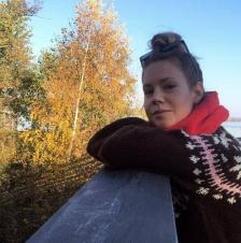
Cecillia Hjort (PhD candidate -Joint PhD program: 2019-2024)
Cecillia (Cilla) is a Joint PhD student at Lund University in Sweden (Biology Department) and Macquarie University, supervised by Prof Henrik Smith and Rachael Dudaniec. Cilla is using Whole Genome Sequencing data and RADseq data of European bumblebees, Bombus terrestris, to examine population and landscape genetic structure of bumblebees in southern Sweden with a comparison in Tasmania, Australia. In Sweden Cilla is looking at hybridisation between commercially released and native B. terrestris and landscape genomic relationships. In Tasmania (Australia) B. terrestris is invasive, and Cilla will be examining patterns of local adaptation and landscape genetic connectivity to help understand potential invasion pathways of bumblebees elsewhere within Australia. Contact: [email protected]
Cecillia (Cilla) is a Joint PhD student at Lund University in Sweden (Biology Department) and Macquarie University, supervised by Prof Henrik Smith and Rachael Dudaniec. Cilla is using Whole Genome Sequencing data and RADseq data of European bumblebees, Bombus terrestris, to examine population and landscape genetic structure of bumblebees in southern Sweden with a comparison in Tasmania, Australia. In Sweden Cilla is looking at hybridisation between commercially released and native B. terrestris and landscape genomic relationships. In Tasmania (Australia) B. terrestris is invasive, and Cilla will be examining patterns of local adaptation and landscape genetic connectivity to help understand potential invasion pathways of bumblebees elsewhere within Australia. Contact: [email protected]
Bridget Campbell (PhD candidate: 2021-2024)
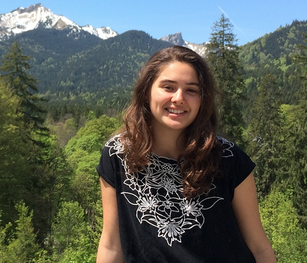
Bridget is a PhD student in the School of Natural Sciences at MQ, with primary supervisor Dr Emilie Ens (co-supervisor Rachael Dudaniec) . Prior this this Bridget completed her Masters of Research with Dr Emilie Ens on cross-cultural conservation with Indigenous communities in Arnhem land, Her PhD work will continue this important work and the project will include landscape genomic analysis of culturally significant reptile species sampled by indigenous communities within Arnhem land. Prior to her graduate studies, Bridget worked in the Dudaniec Lab as a field and lab assistant for research on the pest grasshopper Phaulacridium vittatum and 2) the damselfly Ischnura heterosticta in New South Wales and QLD to answer questions about how populations sizes and phenotypic variation covary with environmental conditions. [email protected]
Bridget is a PhD student in the School of Natural Sciences at MQ, with primary supervisor Dr Emilie Ens (co-supervisor Rachael Dudaniec) . Prior this this Bridget completed her Masters of Research with Dr Emilie Ens on cross-cultural conservation with Indigenous communities in Arnhem land, Her PhD work will continue this important work and the project will include landscape genomic analysis of culturally significant reptile species sampled by indigenous communities within Arnhem land. Prior to her graduate studies, Bridget worked in the Dudaniec Lab as a field and lab assistant for research on the pest grasshopper Phaulacridium vittatum and 2) the damselfly Ischnura heterosticta in New South Wales and QLD to answer questions about how populations sizes and phenotypic variation covary with environmental conditions. [email protected]
Natalie Hejl (née Caulfield) (PhD candidate: 2019-present)
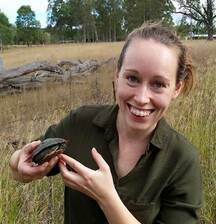
Natalie completed her Masters research in 2019) on ‘Characterising swamp biodiversity and community structure with environmental DNA’, supervised by Anthony Chariton and Rachael Dudaniec. For her PhD project she is continuing this work by examining the impacts of the 2019-2020 bushfires on swamp recovery (with supervisors Anthony Chariton and Adam Stow). She is sampling soil sediment from swamps within the Sydney Basin Bioregion (Blue Mountains and Upper Nepean regions) and is using eDNA metabarcoding techniques to investigate the functional biodiversity and structure found in these environments. This project is a part of a NSW Saving Our Species and NSW Environmental Trust funded research program (led by Rachael Dudaniec). Contact: [email protected]
Natalie completed her Masters research in 2019) on ‘Characterising swamp biodiversity and community structure with environmental DNA’, supervised by Anthony Chariton and Rachael Dudaniec. For her PhD project she is continuing this work by examining the impacts of the 2019-2020 bushfires on swamp recovery (with supervisors Anthony Chariton and Adam Stow). She is sampling soil sediment from swamps within the Sydney Basin Bioregion (Blue Mountains and Upper Nepean regions) and is using eDNA metabarcoding techniques to investigate the functional biodiversity and structure found in these environments. This project is a part of a NSW Saving Our Species and NSW Environmental Trust funded research program (led by Rachael Dudaniec). Contact: [email protected]
Former lab members
Mateo Carol Villavedra (Masters of Research -2022)
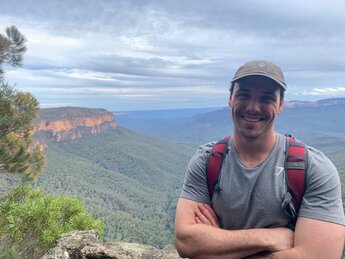
Mateo's Masters of Research project (co-supervised by A//Prof Linda Beaumont) investigates the morphological and genetic responses of the Swordgrass Brown Butterfly, Tisiphone abeona, to climate variability across geographic and temporal scales. This project uses T. abeona specimens captured from 1910 to the present,to assess shifts in morphological and genetic variation. Single Nucleotide Polymorphism (SNP) data from 94 contemporary specimens will be be used to investigate genetic structure and landscape genetic connectivity and associations with morphology.The results of this study will contribute to the growing field of understanding evolutionary responses to climate change, particularly in highly sensitive insect tax. Mateo will continue his research as a PhD candidate in 2024.
Mateo's Masters of Research project (co-supervised by A//Prof Linda Beaumont) investigates the morphological and genetic responses of the Swordgrass Brown Butterfly, Tisiphone abeona, to climate variability across geographic and temporal scales. This project uses T. abeona specimens captured from 1910 to the present,to assess shifts in morphological and genetic variation. Single Nucleotide Polymorphism (SNP) data from 94 contemporary specimens will be be used to investigate genetic structure and landscape genetic connectivity and associations with morphology.The results of this study will contribute to the growing field of understanding evolutionary responses to climate change, particularly in highly sensitive insect tax. Mateo will continue his research as a PhD candidate in 2024.
Lauren Common (PhD candidate -2020-2023)
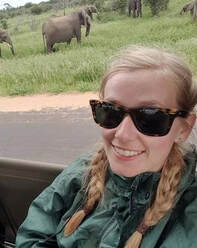
Lauren is a PhD student at Flinders University (South Australia) jointly supervised by Rachael Dudaniec and Sonia Kleindorfer (Flinders University, and Konrad Lorenz Insitute, Austria). Lauren is investigating the behaviour and population genomics of the introduced avian parasite to the Galapagos Islands, Philornis downsi. Lauren is examining fitness costs of Philornis parasitism in Darwin's finches, changes in host-parasite interactions, and is answering questions about the fly's biology using genomic data (relatedness, dispersal and local adaptation) collected across islands of the Galapagos. Lauren is now a post-doctoral researcher based at the University of Vienna, Konrad Lorenz Institute and continues to work on the Galapagos system and other avian taxa: Contact: [email protected]
Lauren is a PhD student at Flinders University (South Australia) jointly supervised by Rachael Dudaniec and Sonia Kleindorfer (Flinders University, and Konrad Lorenz Insitute, Austria). Lauren is investigating the behaviour and population genomics of the introduced avian parasite to the Galapagos Islands, Philornis downsi. Lauren is examining fitness costs of Philornis parasitism in Darwin's finches, changes in host-parasite interactions, and is answering questions about the fly's biology using genomic data (relatedness, dispersal and local adaptation) collected across islands of the Galapagos. Lauren is now a post-doctoral researcher based at the University of Vienna, Konrad Lorenz Institute and continues to work on the Galapagos system and other avian taxa: Contact: [email protected]
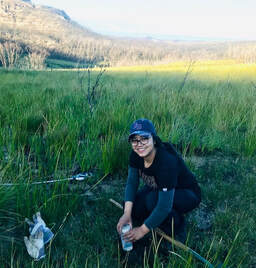
Nusrat Jahan Sanzida (Masters of Research 2021-2022)
Nusrat completed her thesis in March 2022. Her research investigated how macroinvertebrate communities respond to fire in Blue Mountains swamps, specifically Springtails (Collembola). With sampling of springtails before and after fire the 2020 bushfires that ravaged Australia, Nusrat used a barcoding approach to characterise springtail diversity and assess if this taxon may function as a bioindicator of swamp fire recovery. This project is a part of a NSW Saving Our Species and NSW Environmental Trust funded research program (led by Rachael Dudaniec).
Nusrat completed her thesis in March 2022. Her research investigated how macroinvertebrate communities respond to fire in Blue Mountains swamps, specifically Springtails (Collembola). With sampling of springtails before and after fire the 2020 bushfires that ravaged Australia, Nusrat used a barcoding approach to characterise springtail diversity and assess if this taxon may function as a bioindicator of swamp fire recovery. This project is a part of a NSW Saving Our Species and NSW Environmental Trust funded research program (led by Rachael Dudaniec).
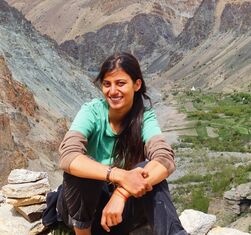
Sonu Yadav (PhD graduate: 2017-2020)
Project title: 'Drivers of landscape genetic patterns and environmental adaptation in Australian grasshoppers'
Sonu completed her PhD in August 2019 , supervised by Rachael Dudaniec and Adam Stow. She investigated the role of genetic adaptation, landscape connectivity and environmental variables in determining species’ ranges and phenotypic traits along latitudinal and altitudinal gradients using genomic data. Here study species were the wingless grasshopper (Phaulacridium vittatum) and grasshoppers of the genus Koscioscola in the Australian Alps (Thredbo, Guthega and Jagungal). Sonu is now Principal Molecular Scientist with the Northern Territory Government in Darwin working on invasive pests and diseases of agricultural concern. Contact: [email protected]
Project title: 'Drivers of landscape genetic patterns and environmental adaptation in Australian grasshoppers'
Sonu completed her PhD in August 2019 , supervised by Rachael Dudaniec and Adam Stow. She investigated the role of genetic adaptation, landscape connectivity and environmental variables in determining species’ ranges and phenotypic traits along latitudinal and altitudinal gradients using genomic data. Here study species were the wingless grasshopper (Phaulacridium vittatum) and grasshoppers of the genus Koscioscola in the Australian Alps (Thredbo, Guthega and Jagungal). Sonu is now Principal Molecular Scientist with the Northern Territory Government in Darwin working on invasive pests and diseases of agricultural concern. Contact: [email protected]
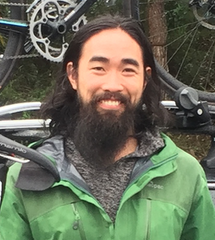
Chuan Ji Yong (Masters of Research 2019)
CJ completed his Masters research on genomic adaptation in Ischnura elegans in mid 2019 under supervision by Rachael Dudaniec and co-supervision of international collaborators Lesley Lancaster (University of Aberdeen), Bengt Hansson, and Erik Svensson (Lund University). CJ investigated genome wide signatures of selection according to the sex chromosomes of the range expanding damselfly in Sweden, Ischnura elegans.
CJ completed his Masters research on genomic adaptation in Ischnura elegans in mid 2019 under supervision by Rachael Dudaniec and co-supervision of international collaborators Lesley Lancaster (University of Aberdeen), Bengt Hansson, and Erik Svensson (Lund University). CJ investigated genome wide signatures of selection according to the sex chromosomes of the range expanding damselfly in Sweden, Ischnura elegans.
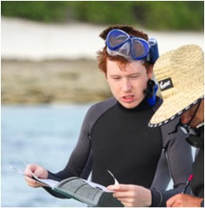
Alex Carey (Masters of Research: 2017)
Alex completed his Masters of Research thesis in November 2018 on the landscape genetics of range expanding damselfly, Ischnura elegans, in Sweden to untangle how neutral genetic variation is structured by climate and landscape variables during range expansion, how this differs between the sexes, and how this affects morphological variation and local adaptation
Alex completed his Masters of Research thesis in November 2018 on the landscape genetics of range expanding damselfly, Ischnura elegans, in Sweden to untangle how neutral genetic variation is structured by climate and landscape variables during range expansion, how this differs between the sexes, and how this affects morphological variation and local adaptation
